How Contact Center Automation Improves Efficiency
- By admin
- Jun 12, 2026

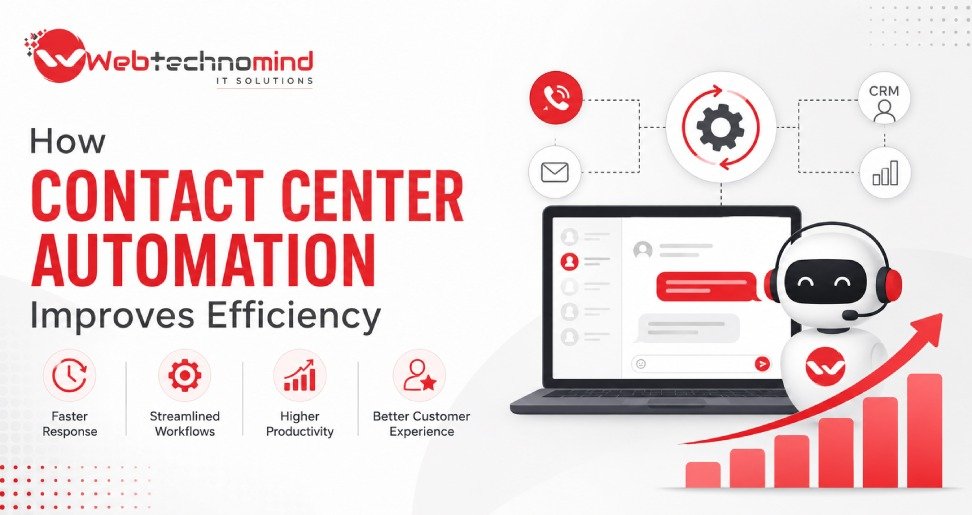
In today’s fast-paced digital economy, customer expectations are higher than ever. American consumers expect quick responses, personalized support, and seamless experiences across multiple communication channels. For businesses, meeting these expectations while controlling operational costs can be challenging. This is where contact center automation becomes a game-changer.
Organizations across the United States are increasingly investing in automation technologies to streamline customer service operations, reduce wait times, and improve agent productivity. From AI-powered chatbots to intelligent call routing systems, automation is transforming how contact centers operate and deliver customer experiences.
In this article, we’ll explore how contact center automation improves efficiency, the latest industry developments, and how businesses can leverage modern solutions to stay competitive.
Contact center automation refers to the use of technology to automate repetitive customer service tasks and workflows. These technologies help businesses handle customer interactions more efficiently through self-service options, intelligent routing, automated responses, and AI-powered assistance.
Instead of requiring human agents to manage every inquiry manually, automation tools can handle routine requests, gather customer information, and direct complex issues to the appropriate representatives.
Modern contact center automation solutions typically include:
The goal is simple: improve customer experiences while increasing operational efficiency.
One of the biggest advantages of automation is its ability to reduce average handling time (AHT). Automated systems can instantly collect customer information, verify identities, and categorize requests before an agent becomes involved.
For example, an automated chatbot can answer frequently asked questions regarding billing, order tracking, account updates, or appointment scheduling. This eliminates the need for agents to spend valuable time handling repetitive inquiries.
As a result:
Customers dislike being transferred multiple times before receiving assistance. Contact center automation uses intelligent routing to direct inquiries to the most qualified agent based on customer intent, history, and issue type.
AI-driven routing systems analyze incoming requests and connect customers with the right department immediately. This significantly improves First Contact Resolution (FCR), which is one of the most important metrics in customer service performance.
Higher FCR rates lead to:
Many customer service agents spend a significant portion of their day performing repetitive administrative tasks such as data entry, note-taking, and call summarization.
With AI contact center automation, these tasks can be completed automatically. AI tools can generate call summaries, update CRM records, suggest responses, and provide real-time guidance during conversations.
This allows agents to focus on what truly matters:
The result is a more productive workforce and better customer outcomes.
Customers expect support outside traditional business hours. Hiring enough agents to provide round-the-clock service can be expensive.
Automation solves this challenge by enabling continuous customer assistance through virtual agents and chatbots. These systems can answer common questions, process requests, and escalate urgent issues even when live agents are unavailable.
Benefits include:
For businesses serving customers across multiple U.S. time zones, 24/7 support has become a competitive necessity.
Human errors are inevitable, especially during high-volume periods. Automated systems follow predefined workflows and processes, ensuring consistency across every customer interaction.
Automation helps businesses:
This is particularly important for industries such as healthcare, finance, insurance, and telecommunications, where accuracy and compliance are critical.
Modern automation platforms collect valuable customer interaction data in real time. Businesses can analyze customer behavior, identify trends, and uncover opportunities for service improvements.
Advanced analytics can reveal:
These insights enable organizations to make data-driven decisions that improve both efficiency and customer experience.
Artificial intelligence is becoming the foundation of next-generation customer service operations. Recent industry research shows that AI adoption in contact centers has become nearly universal, with organizations increasingly focusing on measurable business outcomes and efficiency improvements. AI-powered agent assistance, predictive routing, and automated customer engagement are among the fastest-growing technologies in the industry.
AI contact center automation goes beyond simple rule-based workflows. It uses machine learning, natural language processing (NLP), and predictive analytics to understand customer intent and deliver intelligent responses.
Examples include:
As AI continues to evolve, businesses can expect even greater levels of efficiency and personalization.
Understanding current contact center automation trends can help businesses prepare for the future.
AI tools are increasingly providing agents with real-time recommendations, knowledge articles, and suggested responses during customer interactions. This reduces response times and improves service quality.
Customers interact with businesses through phone, email, chat, social media, and messaging apps. Automation platforms are helping organizations create seamless experiences across all channels.
Modern AI systems can analyze customer behavior and route interactions based on intent, sentiment, and historical data, improving resolution rates and customer satisfaction.
Voice automation is becoming increasingly sophisticated. Advanced voice assistants can handle complex conversations while delivering more natural customer experiences.
Organizations are placing greater emphasis on analytics and customer insights to optimize performance and identify efficiency opportunities.
Selecting the right contact center automation tools is critical for success. Businesses should evaluate solutions based on:
The best automation platforms empower both customers and agents while supporting long-term business growth.
Implementing automation successfully requires more than technology—it requires expertise.
Web Technomind helps businesses modernize their customer service operations with innovative digital solutions tailored to their unique requirements. Whether you’re looking to implement AI-powered automation, optimize customer engagement workflows, or improve operational efficiency, Web Technomind provides strategic guidance and technology solutions that drive measurable results.
With a focus on innovation, customer experience, and business growth, Web Technomind helps organizations unlock the full potential of contact center automation while maintaining the human touch that customers value.
The future of customer service is intelligent, automated, and customer-centric. Businesses that embrace contact center automation gain significant advantages, including lower operational costs, improved productivity, faster response times, and enhanced customer satisfaction.
As AI technologies continue to evolve, automation will play an even greater role in helping organizations meet growing customer expectations. By investing in the right strategies, technologies, and partners like Web Technomind, businesses can build highly efficient contact centers that deliver exceptional customer experiences while driving sustainable growth.
For organizations looking to stay competitive in today’s digital landscape, contact center automation is no longer optional—it’s essential.




The real estate industry in Delhi has become more competitive than ever. Buyers expect instant responses, personalized property...
Businesses in Delhi operate in one of India’s most competitive markets. Whether you are in real estate, healthcare,...

The real estate industry in Delhi is evolving rapidly, and technology has become a key driver of business...

Delhi is one of India’s fastest-growing food delivery markets. From popular restaurants in Connaught Place to cafés in...